
A dark path through a hallway or beside a bed can make the whole carpet look tired. Sometimes the difference comes from removable soil; sometimes the fibres themselves have changed. Understanding that distinction helps you decide what to expect from professional carpet deep steam cleaning in Calgary.
The useful first question is not simply whether a mark is dark. It is whether the area contains soil, has a different pile direction, shows wear, or combines several of those conditions. An assessment gives a better starting point than promising that every section will finish the same shade.
Three reasons a walkway can look darker
- Soil buildup: frequently used routes receive repeated contact with shoes and tracked-in material. Cleaning targets the soil that can be removed from the carpet.
- Pile direction and shading: fibres lying in different directions can reflect light differently. A patch may look lighter from one side of the room and darker from another.
- Wear: repeated use can change the shape and texture of fibres. A worn path may remain visibly different after the carpet has been cleaned.
The Carpet and FabriCare Institute explains how traffic and pile changes affect appearance. These are possible explanations, not a diagnosis of every dark mark.
A Real Carpet Before-and-After Comparison
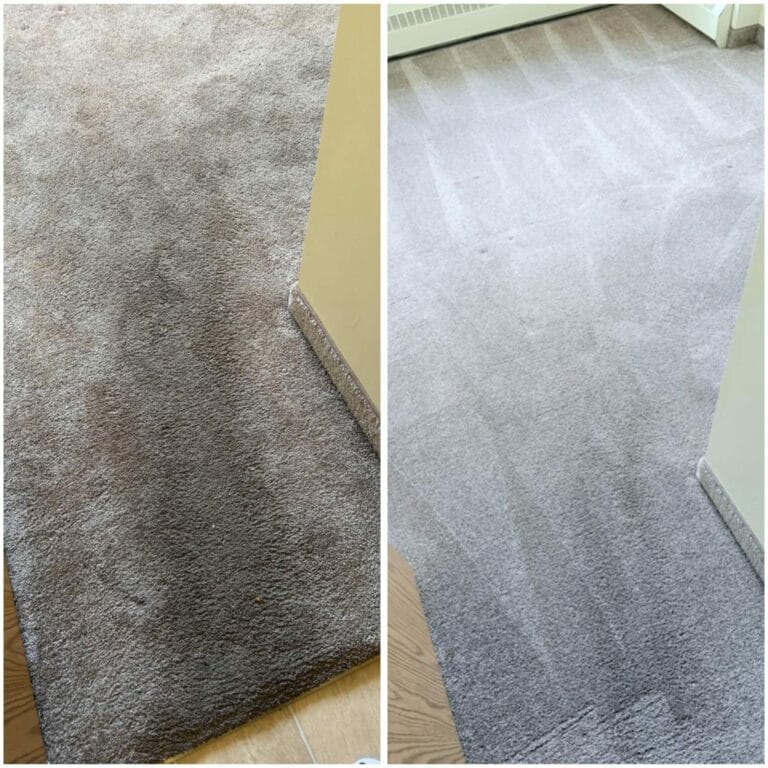
The left photograph shows darker areas along a carpeted route. In the right photograph, the carpet looks lighter and has visible grooming lines. This comparison comes from AD Spotless’s existing work photos. It demonstrates a change in appearance; it does not measure soil removal or identify the original stain.
Compare your own carpet after it has dried, using a similar viewing direction and lighting. Fresh grooming changes how fibres reflect light, so a bright photograph alone cannot establish that worn fibres have been restored. Cleaning removes treatable soil; it cannot replace missing fibres or reverse every permanent colour change.
What to notice before your appointment
Tell us where the difference appears and how long you have noticed it. A route between two doorways, the turn at the bottom of stairs, and a mark left by a spill are useful details to distinguish. Mention whether the carpet changes appearance when viewed from the opposite direction.
Also share any known spill, pet accident or previous spot treatment. Avoid repeatedly soaking or scrubbing an uncertain mark before it has been assessed. If furniture was recently moved, explain which areas were previously covered.
You do not need to move heavy furniture for the assessment. We clean accessible areas and can work under beds where there is enough clearance. Our bedroom carpet-cleaning guide explains how to plan around furniture.
What professional cleaning can improve
Traffic-lane treatment focuses on the soil in the affected route and the surrounding carpet. Our carpet-cleaning process guide explains how we prepare, rinse and extract the fibres.
Cleaning may improve a heavily used area without making it identical to a protected section of carpet. We will do our best to remove stains, but cannot guarantee the removal of everything. Stain history, previous products and the carpet’s condition affect the result.
Allow the carpet to dry before judging the finished appearance. If a mark remains or returns, contact us to discuss it rather than assuming either that it must be permanent wear or that it simply needs more product. Our carpet drying guide covers planning and aftercare.
Illustrative Example: A Dark Hallway
Suppose a busy hallway looks darker than the carpet beneath furniture in the adjoining room. First, note whether the difference follows the walking route and whether its shade changes when you view it from the opposite end. Also identify any separate spill marks. Those observations help distinguish a broad traffic pattern from a localized stain.
Where soil is removable, treatment and cleaning may improve the hallway’s appearance. If physical wear or shading also contributes, some contrast can remain. We perform double extraction after rinsing to recover as much moisture and suspended soil as possible, then the carpet needs time to dry before the result is judged.
This is an example of the assessment process, not a claim about a specific customer. If an isolated spot returns during drying, consult our wicking explanation and contact us. A recurring spot calls for a different assessment from a walkway that remains shaded from the outset.
Give busy routes more regular attention
Follow your carpet manufacturer’s vacuuming guidance and use equipment suited to the material. High-use paths usually need attention more often than quieter areas. Shaw’s carpet-care guidance explains how grit contributes to wear and why vacuum selection matters.
Keep entry mats clean, deal with loose tracked-in debris promptly, and include busy walkways in your maintenance routine. Choose a professional-cleaning schedule around actual use and condition; our cleaning-frequency guide can help.
Arrange a carpet-cleaning quote
Tell us the number of carpeted areas, the number of stair sets, and the overall condition. Point out the traffic lanes you want assessed so we can confirm the scope and price.
Get a carpet-cleaning quote or call 587-579-2797.
Find more advice in our Carpet Cleaning Resource Center.